Ilford landlords waste duty and rubbish removal rules
Posted on 06/10/2026

Ilford landlords waste duty and rubbish removal rules: a practical guide for landlords, letting agents and property managers
If you rent out property in Ilford, waste can become a surprisingly messy part of the job. Leftover furniture, black bags in the hallway, end-of-tenancy clear-outs, builders' rubble after repairs, old white goods, you name it. The tricky bit is that Ilford landlords waste duty and rubbish removal rules are not just about keeping a property tidy. They touch on legal responsibility, tenant behaviour, local enforcement, and the simple reality that rubbish left in the wrong place can turn into a complaint very quickly.
This guide breaks the topic down in plain English. You will see what the duty means, how rubbish removal usually works for landlords in Ilford, what good practice looks like, and where people often slip up. If you are trying to protect a tenancy deposit, avoid council trouble, or just stop waste becoming one more headache on a busy Tuesday morning, this will help.
And yes, it really can be that ordinary and that stressful at the same time.
Why Ilford landlords waste duty and rubbish removal rules matter
Most landlords think about rent arrears, void periods, gas checks, or repairs before they think about waste. Fair enough. Rubbish usually looks like a small issue until it is sitting in the front garden, blocking a shared passage, or attracting complaints from neighbours. Then it stops being a small issue. Fast.
In a place like Ilford, where rental homes, flats, HMOs, and family lets often sit close together, waste can affect more than one property. A mattress dumped beside the bins can become a neighbour dispute. A builder's skip left too long can annoy everyone in the block. A pile of old tenant belongings can delay the next letting date. The practical knock-on effect is real, and often immediate.
There is also the compliance side. Landlords have to think about who produced the waste, who arranged removal, whether a contractor was properly authorised, and whether waste was handed over responsibly. That is the bit that catches people out. Many assume rubbish is "just rubbish", but in practice there are separate rules around duty of care, controlled waste, fly-tipping risks, and landlord responsibility for premises they control or manage.
For investors and accidental landlords alike, the reason this matters is simple: waste mistakes create friction. They create extra cost, delays between tenancies, and sometimes evidence trails you would rather not have if there is a complaint. Nobody wants to be the person explaining why a load of old cupboards ended up in a public alley behind a terrace in IG1.
Practical takeaway: the cleaner and more documented your waste process is, the easier it is to keep tenants happy, protect your property, and avoid needless disputes.
That sounds obvious, but in day-to-day letting work, obvious things are often the first to slip. A quick call, a missing receipt, and suddenly the whole situation is more awkward than it needed to be.
How Ilford landlords waste duty and rubbish removal rules work in practice
At a practical level, the landlord's role is to make sure waste from the property is handled properly. That does not always mean the landlord physically removes the rubbish. It means the landlord must be clear about responsibility, arrange removal when needed, and avoid allowing waste to be dumped, stored badly, or transferred to an unlicensed operator.
There are a few common waste situations in rented homes:
- Tenant domestic waste such as black bags, packaging, food waste, and everyday refuse.
- End-of-tenancy waste including belongings left behind, broken furniture, and general clutter.
- Bulky waste like sofas, wardrobes, mattresses, and carpet offcuts.
- Refurbishment waste from repairs, decorating, or light renovation work.
- Garden waste from overgrowth, hedge cuttings, and seasonal clearance.
Each type needs a different level of attention. A normal bin collection is one thing. A full flat clearance after a long tenancy is another. To be fair, that is where landlords sometimes get caught out: they treat all waste as if it can be handled the same way. It cannot.
Good practice usually means working through three questions:
- Whose waste is it? Tenant waste, landlord waste, or contractor waste?
- What type is it? Household rubbish, bulky items, mixed waste, or construction debris?
- How must it be handled? Regular collection, specialised removal, recycling, or licensed disposal?
In a managed tenancy, it can also help to separate responsibilities in the agreement. For example, tenants should know what goes into normal bins, how to present waste, and what happens if they leave items behind. Landlords, meanwhile, should know what they will do if the tenant does not comply. The important bit is not perfection. It is clarity.
There is also the local angle. Ilford landlords often deal with tight-access streets, shared bin stores, parking restrictions, and blocks where waste has to be moved carefully through communal areas. That practical reality matters. A planned removal is much easier than an emergency clear-out after a contractor has left bags in the hallway and it is already 5:30pm.
Key benefits and practical advantages
Getting rubbish removal right is not only about avoiding trouble. Done well, it improves the whole letting operation. A tidy property feels better to live in, easier to inspect, and faster to re-let. You can almost smell the difference when a flat has been properly cleared and aired out after a long tenancy.
Here are the main advantages landlords usually notice:
- Fewer complaints from neighbours, managing agents, and tenants.
- Faster turnaround between tenancies, especially after clear-outs.
- Lower risk of fly-tipping or waste being left in shared areas.
- Better records if a deposit dispute or compliance question comes up.
- More predictable costs because the job is planned rather than rushed.
- Better tenant relationships because the property feels cared for.
There is a quieter benefit too: waste management gives landlords control. When a property is already under pressure, whether from a difficult move-out or a last-minute repair, having a clean process stops the situation from spiralling. Less panic. Fewer phone calls. Fewer "just one more thing" moments.
And if you manage several rentals, the savings are not only financial. You save time. That matters. The difference between a calm handover and a scramble with bin bags in the rain on a Friday evening is bigger than it looks on paper.
Who this is for and when it makes sense
This topic is not only for large portfolio landlords. In fact, some of the biggest waste problems happen with smaller landlords who only deal with removals once or twice a year. When it is not routine, it is easy to make assumptions.
These are the people who most need a clear waste approach:
- Private landlords letting single flats, houses, or rooms in Ilford.
- HMO landlords where shared living creates more waste pressure and more moving parts.
- Letting agents managing end-of-tenancy clearances on behalf of owners.
- Property investors refurbishing between tenancies or preparing for sale.
- Block managers dealing with bulky waste in communal spaces or bin stores.
- Accidental landlords who inherited a property and are learning the ropes as they go.
It also makes sense to pay close attention at certain moments:
- after a tenant leaves belongings behind
- before photographs and re-marketing
- after repairs or decorating work
- when a garden has become overgrown
- when a tenant has been leaving waste outside the property
- when neighbours have already made a complaint
Here is the blunt version: if waste is visible to other people, it becomes someone else's problem too. That is the point where it stops being "just a bit of mess" and starts being a management issue.
Step-by-step guidance
If you want a simple, repeatable way to manage waste as a landlord in Ilford, use a process. Not a complicated one. Just one that gets the job done without guesswork.
1. Identify the source of the waste
Start by working out where the waste came from. Tenant refuse, abandoned furniture, garden cuttings, and builder's rubble should not all be treated the same way. This matters because responsibility and removal method can differ.
2. Separate items by type
Break the waste into useful categories: bagged rubbish, bulky furniture, white goods, green waste, and mixed clearance material. That makes it much easier to decide whether a standard collection, a specialist removal, or a full clearance is needed.
3. Check access and timing
In Ilford, access can be half the battle. Think about stairways, narrow side paths, shared entrances, parking, and collection times. A plan that works on paper can fail quickly if a van cannot stop nearby or if the waste is left in a locked bin store.
4. Decide who is arranging the removal
Is it the tenant, the landlord, the managing agent, or a contractor? This should never be vague. One of the easiest ways to end up with missed collections is to assume someone else has sorted it.
5. Use a properly licensed waste carrier
This is one of the most important steps. Landlords should make sure any contractor used for rubbish removal is legally able to transport waste. Keep the paperwork. It sounds dull. It is dull. But dull paperwork has a habit of becoming very useful later.
6. Get a clear price and scope
Before anything is removed, ask what is included: labour, loading, disposal, recycling, additional access charges, and any extra cost for heavy or awkward items. That avoids the "oh, by the way..." moment once the van has already arrived.
7. Photograph the before and after condition
Pictures are simple and surprisingly helpful. They can support deposit deductions, handover records, and internal property files. A couple of quick phone photos can save a lot of explaining.
8. Keep records
Store invoices, notes, messages, and disposal details. If a resident, council, or neighbouring owner raises a query, you will be glad you kept them. Honestly, half of property management is just finding the receipt later.
Expert tips for better results
There are a few habits that make a genuine difference, especially if you manage more than one property or live away from the area.
Build waste into the tenancy process. Do not treat it as an afterthought. Put rubbish instructions into the move-in pack, and make end-of-tenancy expectations clear before the tenant leaves.
Do a quick pre-check before checkout. A short visit or video review before the final handover can reveal hidden problems. An overflowing kitchen bin on a Friday is much easier to solve on Wednesday.
Use one standard method for clearances. If your team knows how to handle abandoned goods, bulky waste, and repair debris the same way every time, errors drop quickly.
Think about tenant behaviour, not just the waste itself. Some properties need clearer instructions than others. In HMOs, for example, waste confusion often comes from multiple people using the same bin area and nobody quite knowing whose bag is whose. Human beings, eh?
Plan for the awkward items. Mattresses, sofas, old wardrobes, and appliances often need more care than bagged waste. They also tend to be the items that cause the most visible mess if left outside.
Choose sustainability where practical. Reusable items and recyclable materials should be separated where possible. That may not sound dramatic, but over time it reduces waste and supports a better property standard.
Keep a calm tone with tenants. You will get better results if you explain expectations clearly and firmly, without turning every rubbish issue into a confrontation. Truth be told, most people respond better to calm instructions than to a stern email at 7:40pm.
One small real-world observation: waste problems often improve when the property looks cared for in general. A clean communal area tends to discourage dumping. It is not magic, just behaviour.
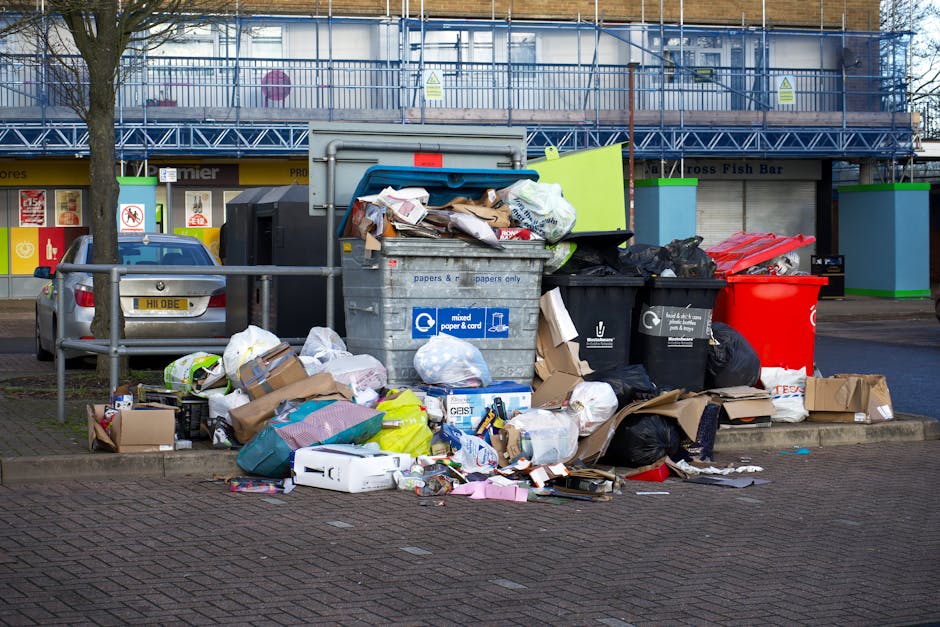
Common mistakes to avoid
Waste management mistakes are usually not dramatic. They are small lapses that compound. That is what makes them annoying.
- Assuming the tenant will sort everything out. Sometimes they do. Sometimes they do not. A landlord still needs a fallback plan.
- Using an unverified removal operator. If waste is fly-tipped later, the fallout can be painful.
- Leaving bulky items in shared areas. This creates complaints, fire risks, and access issues.
- Not documenting abandoned items. If belongings are left behind, document them before disposal.
- Forgetting about mixed waste. A pile of "just a few bits" can turn into several different disposal needs very quickly.
- Ignoring local access constraints. Parking, permits, stairwells, and narrow paths matter more than people think.
- Letting clutter sit between tenancies. Delays are expensive. They also make the property feel worse than it is.
The biggest mistake, though, is waiting until the waste has become visible to the world before doing anything. By then the problem is already louder, messier, and more expensive.
Tools, resources and recommendations
You do not need a huge system to manage waste properly. A few practical tools are enough.
- Phone photos for before-and-after records.
- Inventory software or simple folders for storing waste-related evidence.
- A tenancy checklist with waste expectations at move-out.
- Clear bin instructions for tenants, especially in shared homes.
- A repeatable contractor approval process so you do not have to re-check every time.
If you are comparing services, it helps to review wider business information as well. For example, the site's services overview is useful if you want to understand how different clearance jobs are typically handled, while pricing and quotes can help set expectations before you book anything.
For landlords dealing with furniture, appliances, or mixed household items, these pages are often relevant too: furniture removal in Ilford, white goods and appliance disposal, and house clearance in Ilford. If the waste is more general, domestic waste collection and commercial waste removal may also be relevant depending on the property type and the job size.
For landlords who want to keep an eye on standards around responsible disposal, waste carrier licence and compliance is worth reviewing. It is one of those boring pages that becomes very important if anything ever goes wrong.
Law, compliance, standards and best practice
Landlords should approach waste with the same seriousness they give to other property responsibilities. The key principle is that waste should be handled lawfully, safely, and in a way that does not create a nuisance or a hazard. The exact legal situation depends on the facts, but some practical expectations are consistent.
First, do not allow waste to be dumped. Even if a tenant is the person who left it, the property owner or manager may still need to act quickly to secure the site and arrange lawful removal. Ignoring the problem usually makes it worse, not better.
Second, use responsible contractors. A reputable operator should be able to explain how waste is taken away, where it goes, and what paperwork is provided. If nobody can explain the process clearly, that is a warning sign.
Third, keep records. In property work, records are not bureaucratic fluff. They are protection. If someone questions whether waste was handled correctly, clear evidence matters.
Fourth, remember communal areas and shared access. In flats and HMOs, waste placed in corridors, stairwells, bin stores, or shared gardens can affect fire safety, access, and neighbour relations. Best practice is to keep those areas clear at all times.
Fifth, understand the boundary between household waste and trade or refurbishment waste. A few old bags from a tenant move-out are not the same as plasterboard, tiles, or broken units from a refurbishment. Different jobs need different handling.
If you want a broader sense of the business side, the pages on insurance and safety and terms and conditions help show how a professional service frames risk, responsibility, and expectations. That sort of detail can be genuinely reassuring when you are choosing who to work with.
Options, methods and comparison table
Landlords in Ilford usually have three realistic ways to deal with waste. Each has a place. The best option depends on volume, timing, access, and how much admin you want to handle.
| Method | Best for | Pros | Watch-outs |
|---|---|---|---|
| Tenant handles own waste | Small, ordinary household rubbish | Low cost, simple when tenants cooperate | Risk of missed collection, poor sorting, and disputes |
| Landlord arranges a clearance | End-of-tenancy mess, abandoned items, bulky waste | More control, faster resolution, better records | Higher direct cost, needs planning and a licensed operator |
| Scheduled management approach | HMOs, multi-let buildings, repeat clear-outs | Predictable, easy to document, works well for recurring needs | Requires routine checks and clear communication |
There is no single right answer for every property. For a neat one-bedroom flat, a tenant-led process might be enough. For a block with regular bulky waste issues, that same approach may be optimistic at best. Sometimes you need the straightforward option, not the clever one.

Case study or real-world example
Take a typical Ilford end-of-tenancy situation. A landlord inspects a two-bedroom flat near a busy station route and finds a sofa, a broken coffee table, a mattress, several bags of mixed rubbish, and a few items left in the hallway. The tenant says they were "about to sort it". Of course they were.
The practical response is to act quickly:
- photograph the waste and the affected areas
- confirm what belongs to the departing tenant
- check the tenancy records and any move-out agreement
- book a lawful removal method suitable for bulky and mixed items
- ensure the communal hallway is cleared first, because that affects other residents immediately
- keep invoices and notes for the file
What usually makes the difference is not the size of the job. It is the speed and clarity of the response. When the landlord treats the matter as a process instead of a nuisance, the problem gets smaller much faster. The flat can be cleaned, re-let, and shown again without dragging the whole thing into next week.
And that matters because every extra day of delay is another day of lost momentum. Simple as that.
Practical checklist
Use this quick checklist whenever you are dealing with landlord waste or rubbish removal in Ilford:
- Confirm what type of waste you are dealing with
- Identify whether it is tenant, landlord, or contractor-related
- Check whether the items are bulky, hazardous, or mixed
- Inspect access routes, parking, and communal areas
- Decide whether a clearance or regular collection is needed
- Use a licensed and insured waste carrier
- Get the scope and price confirmed in advance
- Photograph the waste before removal
- Keep invoices and notes on file
- Update tenancy instructions to prevent repeat problems
Small expert reminder: a good checklist saves more time than a clever email chain ever will.
Conclusion
For Ilford landlords, waste is one of those issues that can look minor until it becomes awkward, visible, and expensive. The good news is that most problems are preventable. With clear rules, a simple process, and the right removal support, you can keep properties presentable, protect relationships, and avoid unnecessary compliance headaches.
The real aim is not just to remove rubbish. It is to remove uncertainty. Once everyone involved knows what happens, who is responsible, and how records are kept, the whole job becomes easier. More predictable too. And in property management, predictability is worth a great deal.
If you want to streamline your next clearance or compare practical options for a property in Ilford, start with the basics, ask clear questions, and use a provider that can explain the process plainly. That alone cuts out a lot of stress.
Get a free quote today and see how much you can save.